
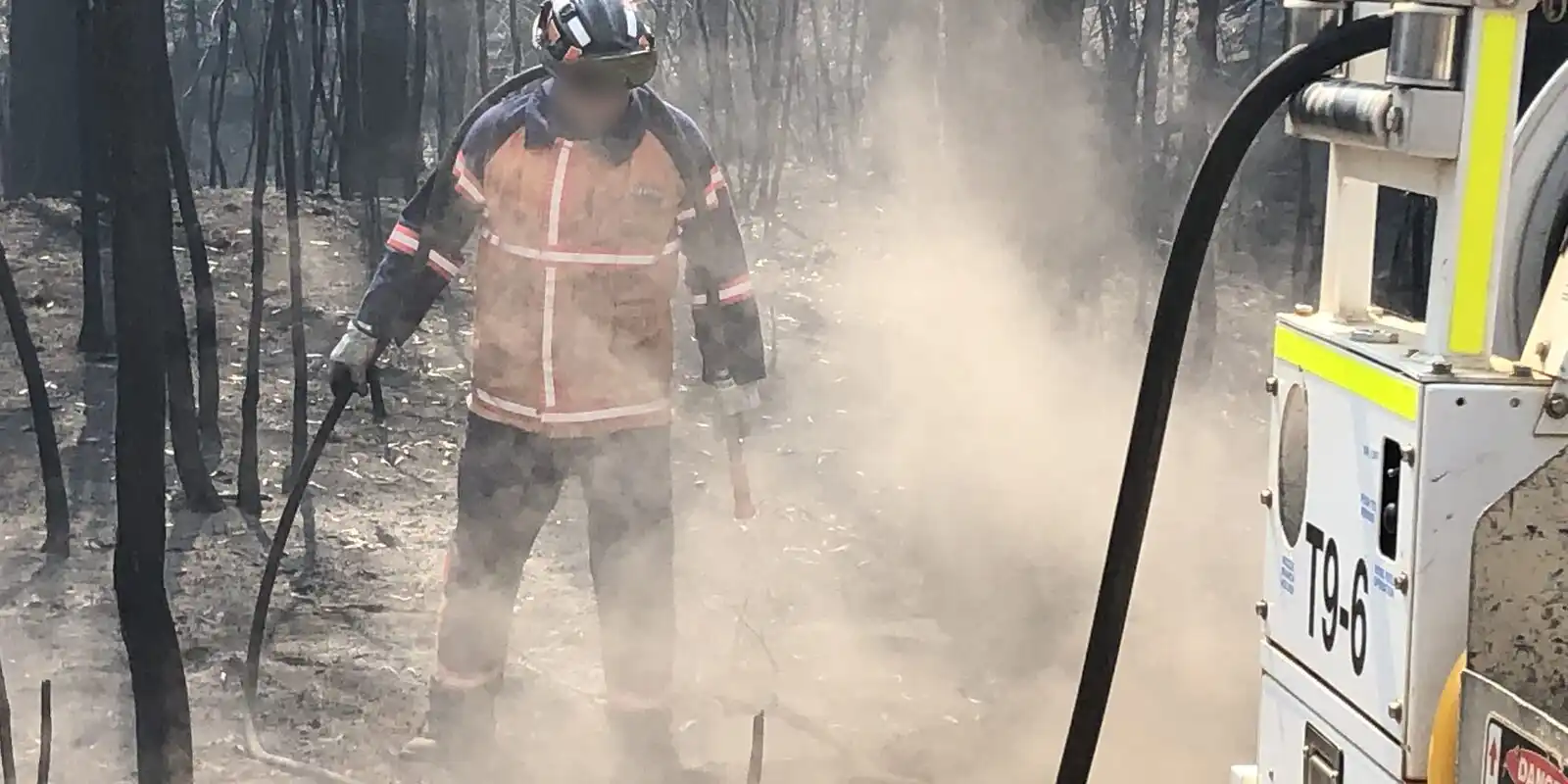
Suppress Wildfire
Fire control strategies and asset protection, mapped to PUAFIR303
For crew members who already respond to wildfire and are ready to work with less direct supervision, and at times to supervise others. Program content is mapped to the national unit of competency PUAFIR303 Suppress wildfire from the PUA Public Safety Training Package: the skills and knowledge to work as a member of a crew applying fire control strategies and safe work practices to extinguish a wildfire, take part in mop up and patrol, and prepare equipment for the next crew.
What the unit covers
Seven elements, moving from the first report through to handing the equipment back ready:
- Receive and report details of the wildfire — location, type, behaviour and developments, recorded and reported to organisational requirements.
- Prepare to respond — confirm the location and the safest access, obtain protective clothing and equipment, food and water, and select the most appropriate appliance or vehicle.
- Proceed to the fire — confirm the location on approach, gain access without injury or damage including to environmentally sensitive areas, note evidence of fire cause, use navigational aids, and report arrival.
- Protect people and assets — assess who and what is in the threatened area, implement protective procedures under direction, control access to hazardous locations, consider the defensibility of property and assist occupiers, and monitor, check and report on safety and security after the fire.
- Combat the wildfire — take the briefing, confirm and communicate escape routes and safety zones, select and use media and equipment, identify hazards and minimise risk, implement strategies and tactics to meet objectives with the least damage, read fuel, weather and topography to anticipate fire behaviour, keep communication through the chain of command, provide fire reports, and protect the area of origin.
- Conduct mop up and patrol to organisational procedures.
- Recover and maintain equipment — make it ready for operational use and replace, record and report anything damaged or missing.
The knowledge behind it takes in offensive strategies (direct, indirect, parallel and combined attack) and defensive strategies (community and asset protection); tactics including backburning and burning out, hand and machine control line construction and direct suppression; crew protective procedures such as alerts and warnings, in-situ protection and relocation; and navigation with maps, aerial photographs, compass and GPS.
How EMTRAC delivers it
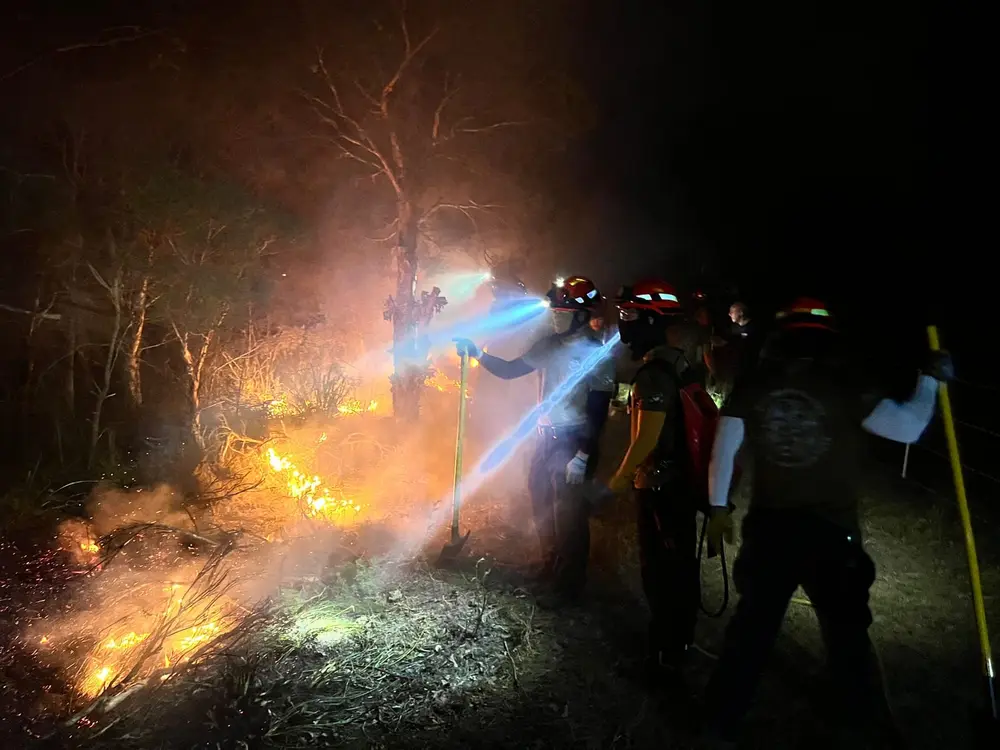
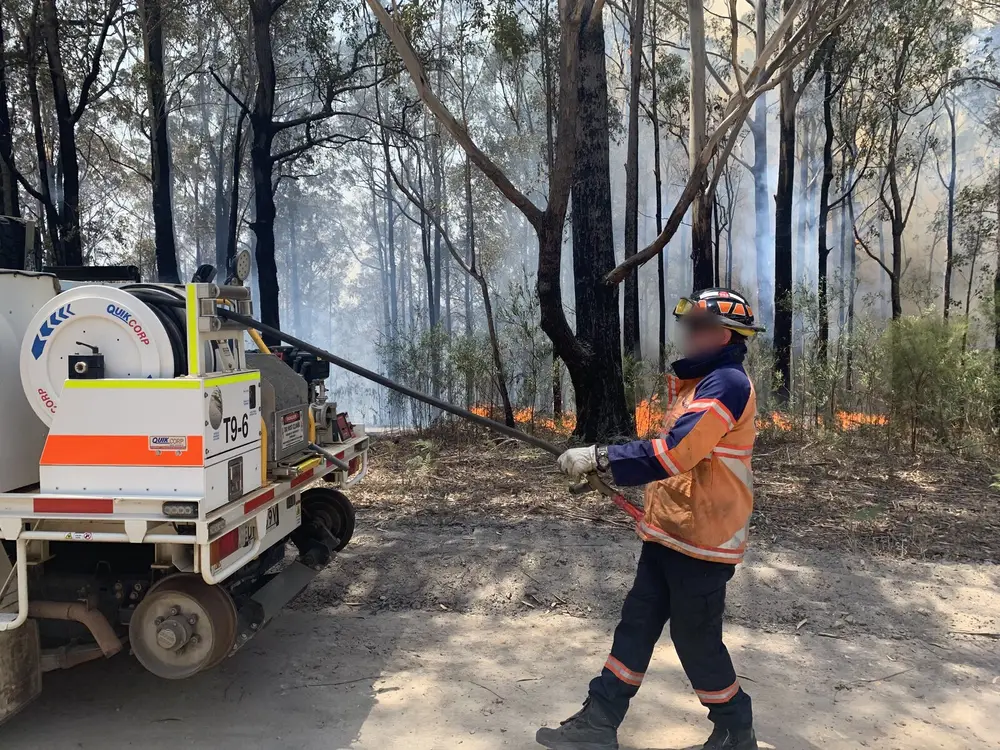
Classroom learning, equipment familiarisation, field training, practical exercises, scenarios, assessment and a facilitated debrief, run from the Hunter Valley training base. The unit requires assessment resources that include access to wildfire or prescribed burns or an approved field-based environment, with firefighting equipment and extinguishing media — the base’s bushland, tankers, plant and live-fire capability are what make that possible on the one site.
Participants must hold PUAFIR204 Respond to wildfire, which the unit lists as a prerequisite; EMTRAC’s Respond to Wildfire program is mapped to it. Delivery arrangements, accreditation and who issues any statement of attainment are confirmed for each program rather than assumed.
What we provide
- Receiving, recording and reporting fire details through the chain of command
- Selecting the appliance or vehicle and navigating safely to the fire
- Protecting people and assets in the path of a wildfire
- Offensive and defensive strategies — direct, indirect, parallel and combined attack
- Tactics — backburning and burning out, hand and machine control lines, direct suppression
- Anticipating fire behaviour from fuel, weather and topography
- Mop up, patrol, and making equipment ready for the next crew
Where this sits in the lifecycle
The stages this capability covers are highlighted.
-
Assess
The operating environment, activities, hazards, access and response limitations are worked through on site and on paper.
-
Plan
A protection model is developed proportionate to what the assessment found — not to a standard package.
-
Prepare
Personnel, vehicles, plant, equipment, communications and technology are configured to the model.
-
Protect — relevant to this page
Capability is deployed and maintained for the duration of the works or the contract.
-
Respond — relevant to this page
Crews provide initial fire response, incident management support and emergency communications from the ground.
-
Train — relevant to this page
Programs are run for client Emergency Response Teams and for national and international wildfire participants.
-
Review
Post-action reports and digital incident records close the loop after operations, burns and exercises.
The digital layer
EMLearn
Online training
An online training platform offering over 170 interactive modules covering fire, safety, compliance and professional development.
Go deeper on the partner sites
EMTRAC brings the two capabilities together. Where a partner holds the deeper detail, it is linked here.
Take your crews from responding to suppressing.
Tell us where your people are up to and the environment they work in, and we will scope a Suppress Wildfire program and confirm delivery and accreditation arrangements.